

How Raila Odinga’s journey continues to inspire a generation of young Pan-Africans
By Mwalimu Johnpaul Arigumaho — Bugema University
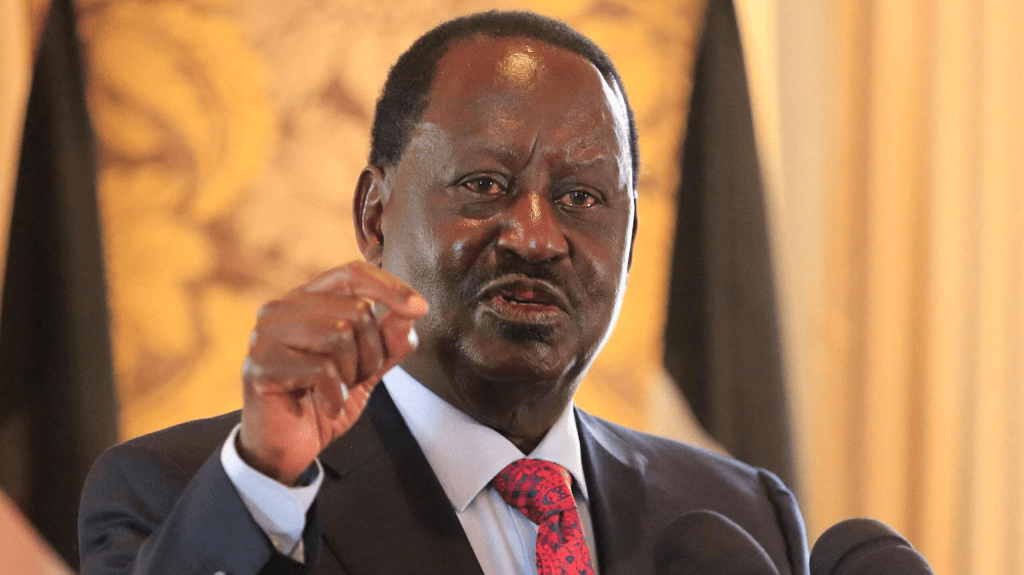
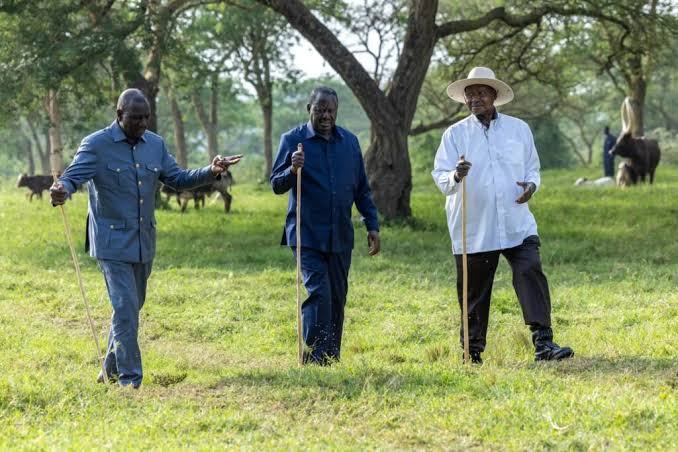
Today, we mourn not just a Kenyan statesman but a symbol of hope, resistance and unity. Raila Amolo Odinga has passed into history, leaving behind a legacy that stretches far beyond Kenya’s borders to East Africa, to the whole of Africa. It is in remembrance of his achievements, his struggles, his unbowed spirit, that we write this, so that the lessons live on in us, the youth and in every Pan-African heart.
Who He Was, What He Did
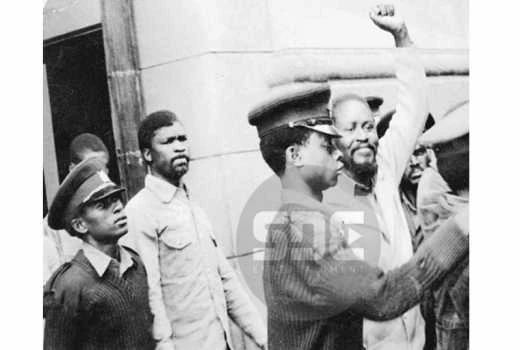
Raila arrested in 1982
Raila Odinga was born into Kenya’s political heritage, son of Jaramogi Oginga Odinga, already steeped in nationalist struggles. But Raila carved his own path often difficult, often painful but always with conviction. Here are some of his most important contributions:
Championing Democracy in Kenya
Raila was central in the fight for multiparty democracy during the repressive single-party era under President Daniel arap Moi. He was detained (and politically harassed) multiple times because he spoke out. After the one-party system ended, he ran repeatedly for the presidency. His resilience helped to hold the reins of power accountable.
After the 2007 election, which was marred by violent dispute over results, he played a major role in steering Kenya into the 2008 National Unity Government as Prime Minister—a delicate deal that brought peace when the country threatened to tear itself apart. Also, he was a key figure in the adoption of the 2010 Constitution of Kenya, which is widely celebrated for its strengthening of democratic institutions, human rights, checks and balances, rule of law, devolution of power, and a bill of rights. Though some of his initiatives, such as constitutional amendments later (e.g. BBI / Building Bridges Initiative), had mixed outcomes, these efforts show his willingness to reform and institutionalize justice.
Infrastructure and Regional Integration
On the continent, Raila became the African Union High Representative for Infrastructure Development in October 2018. In this role, he was charged with mobilizing political support among member states and regional economic communities, facilitating infrastructure projects like missing links in transnational highway corridors, bolstering the Trans-African Highways Network, and supporting continental flagship programs under Agenda 2063.
He understood that for Africa to be truly united and prosperous, physical connectivity is crucial roads, railways, energy lines and ports. These are not just projects; they are lifelines connecting people, enabling trade, access to services, and shared prosperity. He put his political capital into promoting such infrastructure, seeing it as the basis for integration.
Pan-African Leadership and Ambition
Raila did not only act locally; he aimed for the highest continental leadership. He was nominated by Kenya to run for Chairperson of the African Union Commission (AUC), seeking to succeed Moussa Faki. His priorities in that bid included accelerating Africa’s foreign trade integration (AfCFTA), managing conflicts, enhancing Africa’s global voice, ensuring that institutions serve people fairly. Although he did not win, his candidature was supported by many African leaders and regions, showing trust and recognition of his vision
Peace, Dialogue, and Mediation
He was often called upon to calm storms. Within Kenya, during electoral disputes, during protests, Raila used negotiation, dialogue, mass action, legal contestation. Regionally, he participated in peace and mediation efforts—for example in South Sudan, and East Africa’s broader conflicts. His voice in favor of African-led solutions, for dialogue over force, was consistent
What He Stood For: The Principles That Must Endure
From the life of Raila Odinga, we learn not just what was done, but what we must believe in. Here are some of the principles, deeply illustrated by his work:
- Kiswahili: The Language of African Unity
Among Raila Odinga’s many dreams was a vision of a connected Africa—and language was a key part of that vision.
He consistently promoted Kiswahili as a unifying language for East and Central Africa, a language capable of connecting Africans beyond colonial divisions of English, French, or Portuguese.
Raila supported regional programs that elevated Kiswahili to official status in the African Union, a milestone that marked Africa’s linguistic liberation.
He believed that through Kiswahili, Africans could rediscover their shared identity and communicate in one authentic voice.
As a Kiswahili advocate and Pan-African researcher, I see his dream aligning perfectly with my own belief:
That language is not only communication—it is culture, memory, and identity.
Through Kiswahili, Africa can unite, educate and prosper.
Raila understood this deeply. In every speech, his love for Kiswahili reflected his humility and connection to ordinary citizens. He often switched effortlessly between English and Kiswahili to reach everyone—from rural farmers to presidents
2. Truth and Justice, Even When It Costs
He was not a leader who bowed to power when it was unjust. His many presidential bids, his refusal to be silenced in the face of election irregularities, his support for courts and constitutional mechanisms—these all show someone who believed justice is not optional.
3. Unity Across Boundaries
Raila believed that the borders drawn during colonial times should not limit our dreams. East Africa integration, Africa integration, strengthening the AU, pushing for trans-national infrastructure, pushing for trade across borders… this was about creating one people, one economy, one voice.
4. Service Over Self
Many have had power and positions. But Raila used his platforms—local, national, continental—not simply to gain wealth or fame, but to fight for common good: for freedom, for institutions, for people to be heard.
5. Resilience and Perseverance
He lost elections. He was imprisoned. He faced threats. But he kept going. He kept building. He kept speaking out. For younger Africans, this is instructive: not to give up when the odds seem against you.
6. Vision for the Future
His work with Agenda 2063, AfCFTA, his infrastructure role, all show that Raila was not just about the present struggles, but about the future: how Africa can stand tall in the 21st century, self-reliant, united and prosperous.
What Kenya (and Africa) Have Lost
A Moral Compass and a Voice of Opposition that Mattered
Kenya loses not just a politician but a leader whose opposition shaped democracy. When those in power forget the needs of citizens, a strong opposition acts like a mirror: reminding, checking, holding accountable.
Experience and International Respect
Raila had earned the respect of many Africans, leaders, institutions. His AU roles, his leadership in East Africa’s affairs, made Kenya’s voice stronger on continental issues.
A Unifier in Divided Times
Kenya has deep ethnic, regional divisions. East Africa faces border issues, trade disputes, political instability. Raila’s ability to reach across divides (political, regional, generational) made him someone people could turn to for reconciliation, dialogue. With him gone, the burden rests more heavily on others.
A Symbol of Hope for Young Africans
Many of us saw in Raila that change is possible, even when systems seem rigged. Losing that symbol leaves a void; but also, a challenge: to carry forward his hope, his activism.
What Young People & Focused Pan-Africans Learn from Him
As I reflect, as a young scholar at Bugema University, here are what I and many of my peers can draw as lessons:
Courage in Leadership Is Needed: Not just when safe, but especially when risky. Raila entered spaces others feared. He took on entrenched systems. We must be ready to do same; to speak out, organize, hold power to account.
The Importance of Institutions: It’s not enough to protest; building constitutions, courts, regional bodies matter. The structures he helped strengthen (2010 Constitution, AU bodies) ensure long-term impact.
Thinking Big, Acting Bold: East African federation, continental infrastructure, trade, connectivity. Don’t limit yourself to local problems only. See what Africa needs tomorrow.
Patience + Persistence: Many of his efforts were slow, contested, sometimes incomplete. But he persisted. That teaches us that change often comes slowly but must be pursued relentlessly.
Listening and Dialogue: Even when he was an opposition leader, he looked for partners; even when there were tough conflicts, he pushed for negotiation and understanding.
Condolence Message
Kwa familia ya Raila Odinga, kwa majirani wetu Wakenya na kwa vijana wa Afrika kote barani: huzuni yenu ni huzuni yetu. Kenya imepoteza shujaa; Afrika imepoteza mtumishi wa kweli.
Mungu ampe Raila Amolo Odinga mapumziko mema, roho yake ipate amani na kumbukumbu yake iendelee kung’aa kama taa ya haki, Umoja na Ujasiri. Mungu awafariji wale waliompenda zaidi, wale waliomfuata na wale waliokuwa na imani na maono yake.
Na sisi waliobaki, tumheshimu si kwa machozi tu, bali kwa vitendo. Tujijenge juu ya ndoto zake: Afrika Mashariki iliyo na umoja, Afrika yenye ushirikiano, demokrasia iliyopanuka, haki zitimizwe kwa wote na sauti ziongezeke kwa wale wasiokuwa na sauti.
The Flame Never Dies
Raila Odinga was mortal but his ideas, his struggles, his dreams are immortal. He taught us that leadership means sacrifice, that unity is strength, that institutions matter, that integration is not a nice idea but a necessity for Africa’s survival and prosperity.
Sisi vijana wa Afrika, wasomi, wanaharakati na wanamajumui, jukumu sasa limebaki mikononi mwetu. Tusiruhusu kifo chake kuwa mwisho, bali uwe wito wa kuchukua hatua madhubuti za kuimarisha Umoja na wa kudumisha Matumaini yetu.
Tuweke matumaini ya Afrika hai, kama alivyokuwa akitufundisha hayati Shaka Sali.
Pumzika kwa amani, Baba Raila Odinga.
 Jifunze Kiswahili na mwalimu Johnpaul Arigumaho